


CALL US NOW!
+65 9009 7510
CALL US NOW!
+65 9009 7510
Swimming Pool Cleaning Singapore: Costs, Services and Maintenance Guide 2026
Swimming pool cleaning in Singapore involves more than removing leaves and keeping the water looking blue.
A properly maintained pool depends on several systems working together: physical cleaning removes debris, water testing identifies chemical changes, filtration removes suspended material, and the pump keeps treated water circulating through the pool.
When one part is neglected, the symptoms often appear somewhere else. A pool may turn cloudy even after it has been vacuumed because the filter is struggling. Algae may return because circulation is weak. Heavy rain may introduce debris and change water conditions between scheduled visits.
For that reason, a professional swimming pool cleaning service should combine cleaning, water testing, normal chemical adjustment and basic observation of the circulation and filtration system rather than focusing only on the visible surface.

KCN Pool Services currently provides swimming pool cleaning together with pump repair and replacement, filter servicing and replacement, green-pool restoration, plumbing and equipment repair, retiling and other pool-care services in Singapore. Its published cleaning service includes tasks such as brushing, vacuuming, debris removal and water care.
For landed-home pools, KCN currently publishes an indicative maintenance range of approximately S$150 to S$350 per month, depending on pool size. Condominium and commercial facilities are quoted individually according to factors such as pool size, number of pools and required visit frequency. These are KCN’s current published planning figures rather than universal market rates.
This guide explains what professional pool cleaning should include, how often a pool may need servicing, what affects cost, what happens after heavy rain, when a pool needs more than routine cleaning and what owners should check before starting a maintenance arrangement.
What Does Professional Swimming Pool Cleaning Include?
Professional pool cleaning should deal with three connected areas: the physical pool, the water and the circulation system.
Cleaning only the visible leaves or dirt can improve the appearance for a short time, but it does not tell you whether water chemistry, circulation or filtration is functioning properly.
KCN’s current maintenance guidance describes pool care around the three connected elements of circulation, cleaning and chemistry. Its dedicated cleaning page also describes brushing, water care and robot-assisted vacuuming as part of its service approach.
A routine professional visit may therefore involve several stages.
What Happens During a Typical Pool Cleaning Visit?
A useful way to understand professional pool cleaning is:
Inspect → Skim → Brush/Vacuum → Test → Balance → Check Flow → Report
The exact order can vary, but each step has a different purpose.
1. Inspect the Pool
Before cleaning begins, the technician should observe the general condition of the water, surfaces and visible equipment.
Changes such as cloudy water, unusual water loss, weak circulation, algae growth or unusual pump sounds can provide useful clues before work starts.
Regular observation also helps distinguish a one-off water-quality change from a problem that has been developing across several visits.
2. Remove Floating Debris
Leaves, insects and other debris should be removed before they sink or break down.
Organic material left in the pool increases the load placed on filtration and sanitising systems.
Pools surrounded by trees or landscaping may need more debris removal than sheltered pools even when the pools are similar in size.
3. Brush and Vacuum the Pool
Walls, steps, corners and other surfaces can accumulate dirt or algae that surface skimming cannot remove.
Vacuuming helps remove material that has settled on the pool floor.
KCN currently states that its cleaning approach uses brushing together with robot-assisted vacuuming to remove dirt and buildup.
The frequency and intensity of brushing or vacuuming should depend on the pool condition rather than treating every visit identically.
4. Test the Water
Clear-looking water does not automatically mean the chemistry is correctly balanced.
For private pools, KCN’s maintenance guidance recommends regular testing of parameters such as chlorine and pH, with additional checks after heavy rain, heavy use or visible changes in water condition.
The purpose of testing is to make adjustments based on actual readings instead of adding chemicals simply because a certain amount was used during the previous visit.
5. Make Normal Chemical Adjustments
Routine balancing may be carried out according to the readings and the agreed maintenance package.
Owners should check whether normal balancing chemicals are included in the monthly price or charged separately.
Large corrective treatment for a neglected or green pool may fall outside the normal cleaning scope because it can require substantially more chemicals, filtration time and labour.
6. Check Circulation and Filtration
The technician should observe whether water appears to be circulating properly and whether visible equipment shows signs of trouble.
Weak return flow, unusual pump sounds, leaking fittings or recurring filter problems should not be ignored simply because the pool still looks reasonably clear.
KCN’s broader service range includes pump diagnostics and repair, filter inspection and servicing, and plumbing or equipment repair when routine maintenance reveals a technical problem.
7. Report Problems
Routine cleaning and repair work should remain separate.
If the technician finds a pump problem, leaking fitting, damaged filter or another fault, the owner should understand whether it is simply being reported or whether a separate repair quotation will be provided.
This prevents unexpected charges and gives owners a clearer history of how the pool condition is changing over time.
What Is the Difference Between Pool Cleaning and Pool Maintenance?
Pool cleaning focuses mainly on removing dirt, debris and buildup.
Pool maintenance is broader because it includes cleaning plus water testing, chemical adjustment, circulation observation, filtration care and preventive attention to equipment.
The distinction matters when comparing quotations.
One contractor may quote only for skimming, brushing and vacuuming.
Another may include routine water balancing, filter backwashing, equipment observations and service reporting.
A package described as “pool cleaning” or “pool maintenance” should therefore be judged by its written scope rather than the package name alone.
KCN’s current maintenance guidance combines physical cleaning with water balancing and basic equipment observation, while major repairs are treated as separate services.
Routine Pool Cleaning vs Additional Repair
| Task or Problem | Routine Cleaning / Maintenance | Usually Separate Repair or Treatment |
| Surface skimming | Usually included | — |
| Brushing | Usually included | — |
| Vacuuming | Usually included | — |
| Routine water testing | Usually included | — |
| Normal chemical balancing | Depends on package | — |
| Basket clearing / basic filter attention | May be included | — |
| Basic pump and flow observation | May be included | — |
| Green-pool recovery | — | Separate treatment |
| Pump fault | — | Repair or replacement |
| Filter fault or replacement | — | Separate service |
| Plumbing leak | — | Separate repair |
| Tile damage | — | Retiling / repair |
| Surface restoration | — | Separate restoration scope |
The exact inclusions vary between providers, so the written quotation should always take priority over assumptions.
How Often Should a Swimming Pool Be Cleaned in Singapore?
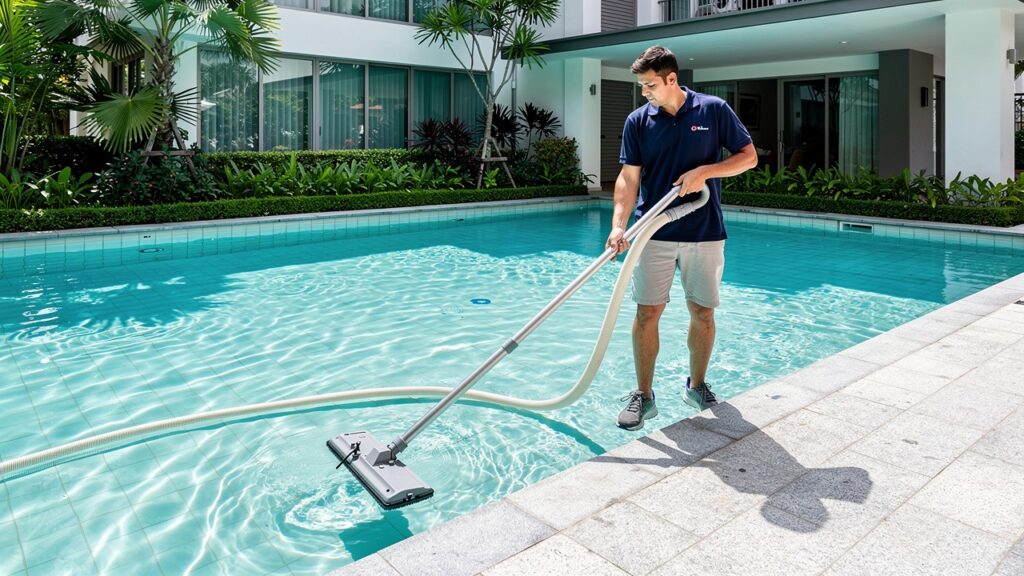
There is no universal cleaning frequency for every private pool.
The appropriate schedule depends on factors such as pool size, surrounding trees, rainfall exposure, bather load, circulation performance and how quickly the water condition changes between visits.
For many landed-home pools, weekly servicing is a common starting point.
KCN’s current maintenance guidance states that it commonly recommends weekly cleaning for landed-home pools, while shared facilities may require more frequent attention depending on their conditions and use. Other KCN service content also refers to weekly or biweekly servicing according to the pool and service arrangement.
A lightly used, sheltered residential pool may be able to follow a different schedule after assessment.
A pool surrounded by vegetation, exposed to frequent debris or used heavily may need closer attention.
If the water repeatedly becomes cloudy or green before the next visit, the maintenance frequency—or the condition of the filtration and circulation equipment—should be reviewed.
Are Condominium and Commercial Pools Different?
Yes.
A private landed-home pool and a condominium or commercial swimming pool should not automatically follow the same servicing programme.
Shared pools normally deal with more swimmers, longer operating periods and more formal management requirements.
Singapore’s National Environment Agency regulates water quality in licensable aquatic facilities with water-recirculation systems at non-residential premises, including swimming pools. Licensees are responsible for maintaining cleanliness and meeting applicable water-quality requirements.
NEA’s current aquatic-facility guidance also includes daily on-site testing requirements for pH and residual disinfectant levels.
This means condominium, hotel, club and other applicable facilities need an operating and maintenance programme designed around their regulatory responsibilities rather than simply copying a residential pool-cleaning package.
A maintenance contractor can support these responsibilities, but the facility licensee remains responsible for compliance.
How Much Does Swimming Pool Cleaning Cost in Singapore?
There is no single monthly rate that applies to every swimming pool.
KCN currently publishes an indicative range of approximately S$150 to S$350 per month for landed-home pool maintenance, depending on pool size.
For condominium and commercial properties, KCN uses customised quotations based on factors including the number of pools, pool dimensions and required service frequency.
These figures should be treated as KCN’s current planning references rather than universal Singapore market averages.
The actual quotation can also depend on what is included.
For example, one monthly service may include routine balancing chemicals while another charges them separately.
One contractor may include regular filter backwashing and basic equipment reporting while another may treat those as additional tasks.
The most useful question is therefore not simply:
“How much is pool cleaning per month?”
It is:
“What exactly is included in that monthly price?”
What Factors Affect the Monthly Pool Cleaning Price?
Pool size is one factor, but it is not the only one.
A contractor may also consider visit frequency, debris exposure, pool condition, water stability, access and the work required during each visit.
A pool underneath several trees can require more cleaning than an equally sized sheltered pool.
A pool that regularly receives many swimmers can require more attention than a lightly used family pool.
Equipment condition also matters indirectly.
If weak circulation or filtration repeatedly causes water-quality problems, routine cleaning can become more time-consuming without fixing the underlying cause.
The property type may also influence service requirements.
A landed home normally has simpler access and fewer management procedures than a condominium where technicians may need to coordinate with security, managing agents or facilities teams.
What Should a Monthly Swimming Pool Cleaning Quote Include?
A useful quotation should make the routine scope easy to understand.
The first item to confirm is visit frequency.
Will the technician attend weekly, biweekly or on another schedule?
Next, confirm the physical cleaning tasks.
Does the package include skimming, brushing, vacuuming, basket clearing and filter attention?
Water care should also be defined.
Does the contractor test the water during every visit?
Which parameters are normally checked?
Are routine balancing chemicals included in the monthly fee, subject to an allowance, or charged separately?
Then ask about equipment observation.
Does the technician perform a basic visual check of the pump, filter, visible plumbing and circulation during routine servicing?
Finally, clarify what happens when something outside the maintenance scope is discovered.
A good quotation should explain whether repairs require separate approval and how additional charges are communicated.
For condominium or commercial properties, reporting requirements should also be written clearly.
KCN’s current maintenance-company guidance recommends defining visit schedules, task scope, chemical inclusions, reporting and the repair-approval process rather than relying on a broad “complete maintenance” description.
What Should You Do After Heavy Rain?
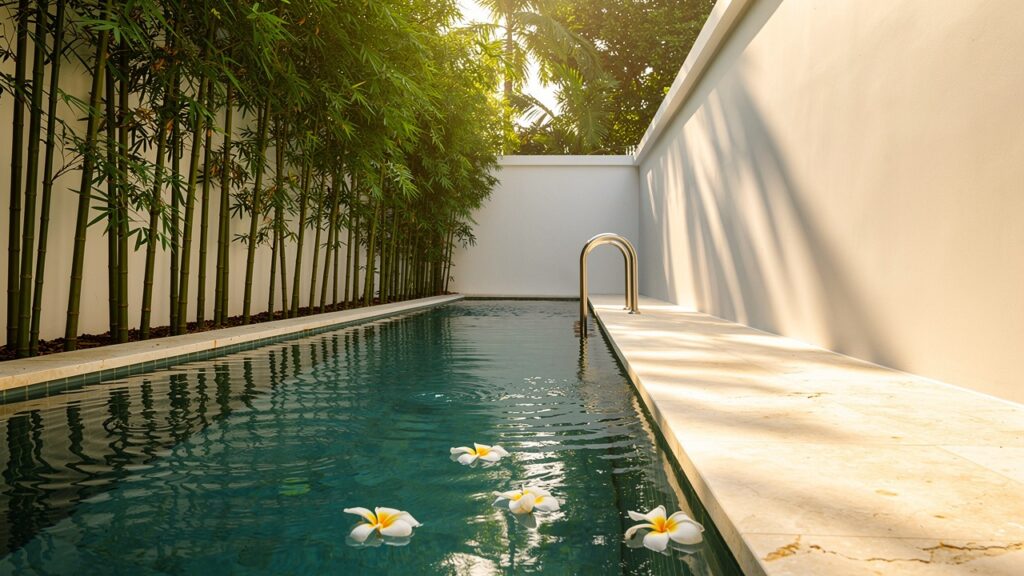
Heavy rain does not automatically mean the pool has a serious problem, but it is a useful time to pay closer attention.
Remove obvious debris where practical and observe whether the water has become noticeably cloudy or changed in appearance.
Check whether circulation still appears normal.
Water conditions may also need to be retested because rainfall can change the condition of the pool between routine visits.
KCN’s maintenance guidance specifically recommends additional water checks after heavy rain, unusually high use or visible cloudiness.
If the pool repeatedly becomes unstable after ordinary Singapore rainfall, the issue may deserve more investigation than simply adding chemicals each time.
Drainage around the pool, filtration performance, circulation and the existing maintenance schedule may all be relevant.
For regulated non-residential aquatic facilities, the operator should continue following applicable NEA testing and operational requirements.
Why Does My Pool Turn Green Even Though It Is Cleaned Regularly?
A pool can turn green even when somebody regularly removes leaves and vacuums the floor because physical cleaning is only one part of pool care.
Recurring green water can be associated with several possible issues.
The water chemistry may not remain stable between visits.
Circulation may be weak.
The filter may not be working effectively.
A large amount of organic debris may be entering the pool.
The cleaning schedule may also be insufficient for the actual pool conditions.
KCN treats green-pool recovery as a separate service and also provides pump, filter and plumbing services when mechanical problems contribute to recurring water issues.
The important point is that repeatedly treating the green colour without investigating why it keeps returning is not the same as solving the underlying problem.
When Does a Pool Need More Than Routine Cleaning?
Routine cleaning is intended to keep a functioning pool stable.
It is not a substitute for mechanical or structural repair.
A pool deserves further investigation when the same problem keeps returning despite normal servicing.
Persistent Green or Cloudy Water
If water repeatedly becomes green or cloudy, review chemistry, circulation and filtration rather than assuming more brushing will solve the problem.
A severe algae problem may need a dedicated recovery treatment.
Weak Water Flow
Weak return flow may indicate a circulation problem.
Possible causes can include pump faults, filtration problems, blockages or plumbing issues.
The cause should be diagnosed before deciding whether equipment needs repair or replacement.
Unusual Pump Noise or Leakage
New vibration, humming, rattling, visible leakage or loss of prime can indicate a developing pump problem.
KCN’s pump service states that its technicians diagnose pump problems and recommend replacement only when it is genuinely necessary rather than treating every fault as an automatic replacement.
Filter Problems
A struggling filter can contribute to recurring cloudy water or poor circulation.
KCN currently provides filter inspection, cleaning and replacement, with published landed-home servicing or replacement guidance depending on pool and filter condition.
Unexplained Water Loss
A pool that repeatedly needs topping up may require investigation.
Leakage can occur around plumbing, fittings, equipment or the pool itself.
KCN’s current repair services cover plumbing leaks and equipment faults in addition to routine cleaning.
How Do You Know Whether the Cleaning Schedule Is Working?
A good maintenance schedule should keep the pool reasonably stable between visits.
The goal is not for the pool to look perfect only immediately after the technician leaves.
If water regularly turns green before the next visit, debris builds up excessively, or circulation problems repeatedly appear, the schedule or underlying equipment condition may need review.
Service records can make this easier to identify.
If the same observation appears repeatedly—such as weak flow, fast chlorine loss, recurring cloudiness or heavy debris accumulation—the owner has evidence that something needs to change.
That may mean increasing visit frequency.
It may instead mean repairing equipment.
The correct response depends on the pattern.
How Should You Compare Swimming Pool Cleaning Companies?
Start with the scope rather than the monthly price.
Ask how often the company will visit and what physically happens during each visit.
Confirm whether water testing and routine chemical adjustment are included.
Ask whether filters and circulation equipment receive basic observation during servicing.
Find out how developing faults are reported.
For condominium and commercial pools, ask what service documentation can be provided and how the company supports the facility team’s operating requirements.
Technical capability can also matter.
A company that handles only surface cleaning may need another contractor whenever a pump, filter or plumbing fault appears.
That is not automatically a problem, but owners should understand who will investigate and coordinate technical issues.
KCN’s current service range combines scheduled pool cleaning with pump, filter, plumbing, green-pool and restoration services.
What Should You Ask Before Starting a Pool Cleaning Contract?
Before agreeing to regular servicing, ask enough questions to understand what you are buying.
How often will you attend?
What cleaning tasks happen during each visit?
What water tests are carried out?
Are normal chemicals included?
Are filter backwashing and basket cleaning included?
Do you observe the pump and filtration system?
How are problems reported?
Do repairs require my approval before chargeable work begins?
What happens after heavy rain or unusually heavy pool use?
For a condominium or commercial pool, what service records will you provide?
A good arrangement should create predictability rather than leave these points to assumption.
Why Consider KCN Pool Services for Swimming Pool Cleaning?
KCN’s current cleaning service goes beyond surface skimming alone.
Its published service information describes regular brushing, water care and robot-assisted vacuuming, while its broader maintenance services include water balancing and equipment observations.
When a routine visit identifies a technical problem, KCN also provides pump repair and replacement, filter servicing and replacement, plumbing and equipment repair, and green-pool restoration.
This can be useful because pool cleanliness, chemistry, filtration and circulation are closely connected.
A recurring water problem may therefore be investigated as a system issue rather than repeatedly treated as a surface-cleaning problem.
For landed homeowners, KCN currently publishes a typical maintenance range of approximately S$150 to S$350 per month, depending on pool size. Condominium and commercial properties receive customised quotations according to their actual requirements.
The final decision should still depend on the written service scope, frequency, reporting and suitability for the particular pool.
Frequently Asked Questions About Swimming Pool Cleaning in Singapore
How Often Should a Residential Swimming Pool Be Cleaned in Singapore?
Weekly professional servicing is a common starting point for many landed-home pools, although the correct schedule depends on pool size, usage, debris exposure, water stability and equipment performance. KCN states that it commonly recommends weekly cleaning for landed-home pools, while other service arrangements may be weekly or biweekly depending on the site.
How Much Does Swimming Pool Cleaning Cost in Singapore?
KCN currently publishes an indicative maintenance range of approximately S$150 to S$350 per month for landed-home pools, depending on pool size. Condominium and commercial pools receive customised quotations based on factors such as pool size, number of pools and required visit frequency.
What Is Included in Professional Pool Cleaning?
A professional cleaning visit may include debris removal, brushing, vacuuming, water testing, routine chemical adjustment and basic observation of circulation and filtration. The exact tasks should be confirmed in the contractor’s written package.
Are Pool Chemicals Included in the Monthly Price?
It depends on the maintenance package. Some contracts include normal quantities of routine balancing chemicals, while others charge them separately. Larger corrective treatment such as green-pool restoration may also be excluded. The quotation should define the chemical inclusion clearly.
What Happens During a KCN Pool Cleaning Visit?
KCN’s current cleaning page describes weekly brushing, water care and robot-assisted vacuum cleaning. Its broader maintenance guidance also covers water balancing and observation of circulation and equipment condition.
Should I Clean My Pool More Often After Heavy Rain?
The regular schedule does not necessarily need to change after every rainfall, but additional observation and water testing may be useful after significant rain. KCN recommends additional water checks after heavy rain, heavy use or visible cloudiness.
Why Does My Pool Keep Turning Green?
Recurring green water can be related to water chemistry, circulation, filtration, organic load or insufficient service frequency. If the problem repeatedly returns, investigate the underlying reason rather than simply repeating the same surface cleaning.
Is Green-Pool Restoration Part of Normal Cleaning?
Not necessarily. Severe algae recovery can require additional chemicals, labour, filtration and repeated treatment, so it may be quoted separately from routine servicing.
What Is the Difference Between Swimming Pool Cleaning and Maintenance?
Cleaning mainly removes physical dirt and debris. Maintenance includes cleaning but also addresses water testing, chemical adjustment, filtration, circulation and equipment observations.
Does a Cleaning Company Repair Pumps and Filters?
This depends on the contractor. KCN provides pump repair and replacement, filter servicing and replacement, and plumbing or equipment repair separately from routine cleaning.
What Should a Monthly Pool Cleaning Quote Include?
The quotation should state visit frequency, routine cleaning tasks, water testing, chemical inclusions, basic equipment checks, reporting, exclusions and how additional repairs are approved.
Are Condominium Pools Subject to Different Requirements?
Applicable non-residential aquatic facilities with water-recirculation systems are regulated by NEA. Licensees are responsible for maintaining cleanliness and meeting relevant water-quality requirements, including current daily on-site testing requirements for pH and residual disinfectant levels.
How Do I Know Whether My Cleaning Schedule Is Frequent Enough?
The pool should remain reasonably stable between visits. Repeated algae, cloudiness, heavy debris buildup or worsening circulation before the next service can indicate that the schedule—or the underlying equipment condition—needs review.
Should Pool Equipment Be Checked During Cleaning?
Basic observation is useful because pump, filter and circulation problems often show early warning signs such as weak flow, unusual noise or recurring water clarity issues. Major diagnostics or repairs may be quoted separately.
Conclusion
Swimming pool cleaning in Singapore works best when it is treated as regular system care rather than a cosmetic exercise.
Skimming and vacuuming remove visible dirt.
Water testing shows whether the water remains balanced.
The filter removes suspended material.
The pump keeps water moving through the system.
When these areas work together, the pool has a much better chance of remaining stable between service visits.
For landed-home pools, KCN currently publishes an indicative maintenance range of approximately S$150 to S$350 per month, depending on pool size, while condominium and commercial facilities receive customised quotations.
The appropriate cleaning frequency also depends on the pool itself. Weekly service is a common starting point for many landed pools, but usage, surrounding debris, rainfall exposure and equipment condition should determine the final schedule.
The practical sequence is straightforward:
inspect → clean → test → balance → check circulation → report developing problems.
When a pool repeatedly turns green, becomes cloudy or loses circulation despite routine cleaning, the next step should not automatically be more cleaning.
The underlying chemistry, pump, filter or plumbing system may need investigation.
KCN Pool Services combines regular cleaning with access to pump, filter, plumbing, green-pool and wider repair services when these issues fall outside routine maintenance.
For owners, the most useful maintenance arrangement is therefore one where the visit frequency, cleaning tasks, chemical inclusions, equipment observations, reporting and separate repair process are clear from the beginning.
A well-maintained pool should not need constant rescue work.
The goal is consistent care that keeps the water stable, catches developing problems early and leaves the pool ready to use throughout Singapore’s year-round swimming season.
Last reviewed: August 2026.
