


CALL US NOW!
+65 9009 7510
CALL US NOW!
+65 9009 7510
Swimming Pool Specialists Singapore: Services, Costs and Owner Guide 2026
A swimming pool specialist in Singapore does more than remove leaves, add chemicals or replace broken equipment.
A pool is a connected system. Water chemistry affects clarity and usability. The pump creates circulation. The filter removes suspended debris. Plumbing carries water through the system. Tiles and coatings form the physical surface that owners and swimmers interact with.
When one part develops a problem, the symptom can appear somewhere else.
Green water may involve chemistry, filtration or weak circulation. Poor return flow may come from the pump, filter, valves or plumbing. A noisy pump may need a component repair rather than complete replacement. Cracked tiles may be a local surface issue or a sign that the condition beneath the finish deserves inspection.
A useful way to understand these problems is through four areas:
Water → Flow → Equipment → Surface
A swimming pool specialist should identify which of these areas is causing the problem before recommending cleaning, repair or restoration.
KCN Pool Services currently provides regular pool cleaning, pump repair and replacement, filter servicing and replacement, green-pool restoration, plumbing and equipment repair, retiling and fibreglass coating for homes, condominiums and commercial properties in Singapore.
This guide explains what swimming pool specialists do, how they differ from cleaners and builders, which specialist service may fit common pool problems, what KCN currently publishes for common service costs and what property owners should check before approving maintenance or repair work.
What Does a Swimming Pool Specialist Actually Do?

A swimming pool specialist maintains, diagnoses, repairs or restores the systems that keep a pool operating.
Routine cleaning can be part of that work, but the specialist role becomes particularly important when the problem cannot be explained by cleaning alone.
A recurring problem may involve water chemistry, circulation, filtration, mechanical equipment, plumbing or the physical pool surface.
The specialist’s job is therefore not simply to offer as many services as possible.
It is to determine which part of the pool system actually needs attention.
The Water–Flow–Equipment–Surface Framework
The Water–Flow–Equipment–Surface framework provides a practical way to diagnose recurring swimming pool problems.
Water
The Water category covers chemistry, algae, cloudiness, sanitisation and general water condition.
A one-off imbalance may be corrected through routine maintenance.
If the water repeatedly becomes green or cloudy, however, the specialist should consider why the condition cannot remain stable.
Flow
Flow covers how water moves through the pool.
Weak return jets, changing pressure or poor circulation can involve the pump, filter, valves, blocked baskets, pipework or air entering the system.
Equipment
Equipment includes pumps, filters and other mechanical components supporting pool operation.
Leaks, noise, unusual pressure, repeated breakdowns or inconsistent performance may require servicing or repair.
Surface
Surface covers tiles, grout, coatings, cracks, edges, steps and pool finishes.
Loose tiles or deteriorated coatings may need local repair, retiling or wider restoration depending on the underlying condition.
These four areas often overlap.
A green pool appears to be a water problem, for example, but poor filtration or circulation may be helping the algae return.
That is why specialist diagnosis is more useful than selecting a service from the visible symptom alone.
Pool Cleaner vs Maintenance Company vs Specialist vs Builder
These roles overlap, but they are not identical.
| Provider | Primary Role | When You May Need One |
| Pool cleaner | Routine debris removal and basic water care | Regular cleaning for a healthy pool |
| Pool maintenance provider | Scheduled cleaning, water management and equipment observations | Ongoing preventive pool care |
| Repair contractor | Repairs a specific diagnosed fault | Pump, filter, plumbing or surface repair |
| Swimming pool specialist | Diagnoses across water, circulation, equipment and surfaces | Recurring, unclear or interconnected problems |
| Pool builder | Designs and constructs swimming pools | New pool construction or major rebuilding |
The categories are not mutually exclusive. One company may offer services across several areas.
The more important question is whether the provider has the technical capability required for the problem in front of you.
A healthy pool requiring routine weekly cleaning may not need a complex specialist assessment every visit.
A pool with repeated algae, weak circulation, unexplained water loss and equipment problems needs a broader investigation.
Which Swimming Pool Service Do You Need?
The visible symptom provides a starting point.
It should not be treated as a final diagnosis.
| Pool Problem | What Should Be Investigated? | Possible Service |
| Green water | Chemistry, filtration, circulation | Green-pool restoration |
| Cloudy water despite cleaning | Chemistry, filter, flow | Maintenance or filtration assessment |
| Weak return jets | Pump, filter, valves, plumbing | Circulation diagnosis |
| Noisy pump | Pump components and motor | Pump servicing or repair |
| Pump leakage | Seals, fittings, housing | Pump inspection and repair |
| High or abnormal filter pressure | Filter, media, circulation | Filter servicing |
| Unexplained water loss | Plumbing, fittings, pool condition | Leak/plumbing investigation |
| Cracked or loose tiles | Tiles and substrate | Retiling |
| Rough or deteriorated finish | Existing surface and preparation | Fibreglass coating or restoration |
| Several recurring problems | Water, flow, equipment and surface | Full specialist assessment |
The word possible matters.
For example, weak jets do not prove that the pump needs replacement. A restricted filter or plumbing problem can create similar symptoms.
When Is Routine Swimming Pool Cleaning Enough?
Not every pool problem needs a repair contractor.
Routine cleaning may be enough when the pool remains stable between visits, circulation appears normal, the water responds to ordinary balancing and there are no recurring equipment or surface problems.
Typical pool care can involve debris removal, brushing, vacuuming, water testing and normal chemical adjustment.
KCN currently offers scheduled cleaning and states that weekly or biweekly arrangements are available depending on the pool and service requirements. Its public service scope also combines routine cleaning with broader pump, filter, plumbing and restoration capabilities when a problem falls outside normal maintenance.
The useful test is not simply whether the pool looks clean immediately after a service.
It is whether the pool remains reasonably stable between visits.
If the same algae, cloudiness or circulation problem repeatedly returns, more cleaning may not be the answer.
When Do You Need a Swimming Pool Specialist?
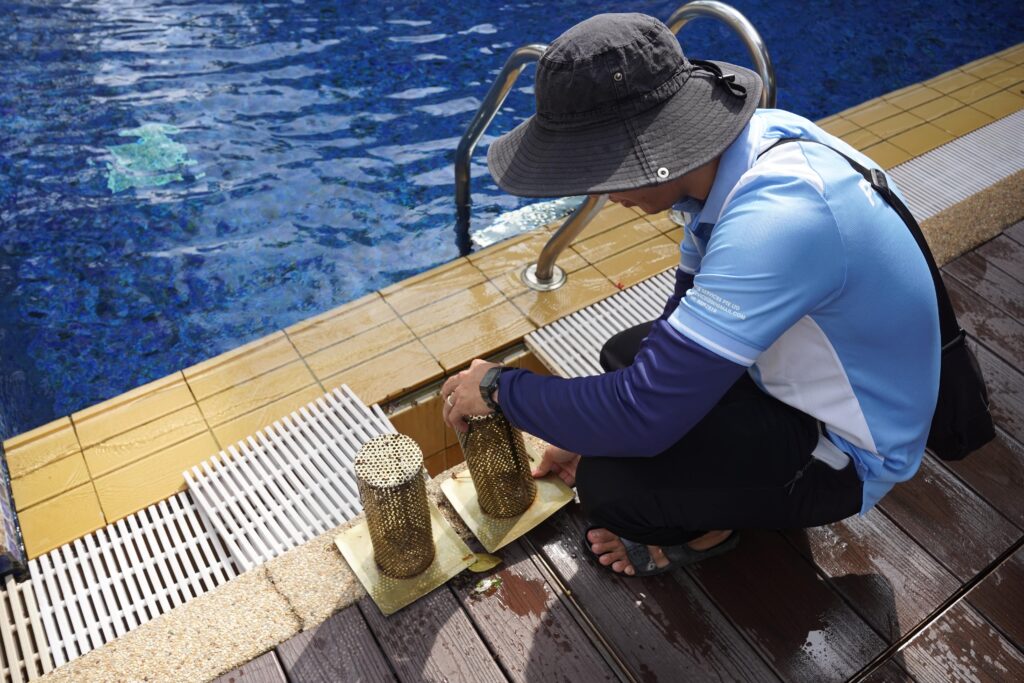
Professional attention becomes more useful when the same problem keeps returning or when several possible causes need to be separated.
Recurring Green Water
Green water commonly involves algae and water-condition problems.
However, a specialist should also consider filtration, circulation and the maintenance history.
If the pool clears after treatment but turns green again shortly afterwards, another round of chemicals may not address the underlying reason.
Cloudy Water Despite Cleaning
Cloudiness can remain even when leaves and visible dirt have been removed.
The specialist may need to consider water balance, filtration performance and circulation.
Weak Return Flow
Weak jets can involve a pump problem, but they can also be caused by a blocked or restricted filter, valve position, obstruction or plumbing issue.
The complete circulation path should be considered before equipment is replaced.
Noisy or Leaking Pump
Mechanical noise may involve bearings, the impeller, motor components or another fault.
Leaks can arise from seals, gaskets, fittings or pump housing.
A localised fault may be repairable. Extensive or repeated failure may eventually justify replacement.
Filter Problems
Poor filtration can contribute to recurring cloudiness or weak circulation.
The filter may need cleaning, servicing, new media or replacement depending on its condition.
Unexplained Water Loss
A pool that repeatedly needs topping up deserves investigation.
Water loss can involve plumbing, fittings, equipment or the pool structure itself.
Cracked or Loose Tiles
Damaged tiles are not always only an appearance issue.
Loose, chipped or sharp surfaces can affect usability, while recurring deterioration may justify checking the condition beneath the finish.
Rough or Deteriorated Pool Surface
When the pool finish becomes rough, cracked or difficult to maintain, resurfacing or coating may become more appropriate than repeated local patching.
Why Use a Pool Specialist Instead of Treating Each Symptom Separately?
The value of specialist care is not that the contractor performs more work.
It is that the contractor understands how the different problems may be connected.
Consider weak circulation.
Replacing the pump may appear logical.
But if a restricted filter is causing the flow problem, a new pump may not solve the complaint.
Consider green water.
Chemical treatment may restore clarity temporarily.
But if circulation remains weak or filtration is ineffective, algae can return.
Consider cracked tiles.
Replacing the damaged tiles may improve the appearance.
But if deterioration beneath the surface is causing repeated failure, a larger repair may eventually be required.
The specialist approach is therefore:
symptom → diagnosis → appropriate service
rather than:
symptom → favourite product or repair method.
What Does Professional Pool Cleaning and Water Care Include?
Routine pool maintenance helps prevent small problems from developing unnoticed.
KCN’s current public service information describes regular cleaning that includes physical cleaning and water care, while its wider service range provides access to technical repair when a maintenance problem becomes mechanical.
Physical cleaning removes debris before it settles or decomposes.
Water testing provides information about the condition of the pool rather than relying on appearance alone.
Observation of pump flow, filter condition and visible equipment can also reveal gradual changes between visits.
This is why consistent maintenance can function as both cleaning and early detection.
What Does Pump Repair and Replacement Involve?
The pump drives circulation through the filtration system.
When it becomes noisy, leaks or loses performance, the technician should determine whether the fault is localised or more extensive.
A seal, gasket, bearing or another component may sometimes be repaired.
A heavily damaged motor or housing, repeated failure or poor performance after previous repair can make replacement more practical.
The important principle is diagnosis before replacement.
A pump should also be considered alongside the filter and plumbing because these systems influence the same water flow.
What Does Filter Servicing Involve?
The filter removes suspended material from circulating water.
When filtration becomes restricted or ineffective, owners may notice cloudy water or weaker circulation.
Filter servicing can involve inspection, cleaning, media work and assessment of related valves or housing depending on the system.
A specialist should also consider whether the filter is correctly matched to the pump and circulation requirements.
A new pump cannot compensate indefinitely for a badly restricted or damaged filter.
What Is Green-Pool Restoration?
Green-pool restoration is used when algae or water deterioration has progressed beyond ordinary maintenance.
The service may require more intensive water treatment, physical cleaning, filtration attention and follow-up than a normal scheduled visit.
KCN treats green-pool recovery as one of its separate specialist services rather than presenting every severe algae case as normal cleaning.
The important question after the water clears is:
Why did it turn green?
If circulation, filtration or servicing frequency contributed to the problem, those issues should also be addressed.
What Does Pool Retiling Involve?
Retiling can range from a small local patch to replacement across a much larger part of the pool.
A suitable process should consider not only the replacement tile but also the condition of the surface beneath it.
Loose or cracked material may need removal and preparation before new tiles, grout and sealant are installed.
If tile failure is widespread, the contractor should determine whether the issue is genuinely localised or part of a broader surface or substrate problem.
What Is Fibreglass Pool Coating?
Fibreglass coating can be considered for suitable deteriorated pool finishes where resurfacing is required.
The existing condition matters because successful coating depends heavily on preparation.
Cracks, loose material or other defects may need treatment before the final coating system is applied.
Fibreglass should therefore not automatically be presented as a solution for every leaking or rough pool.
The underlying problem still needs to be understood first.
Why Does Singapore Require Consistent Pool Care?
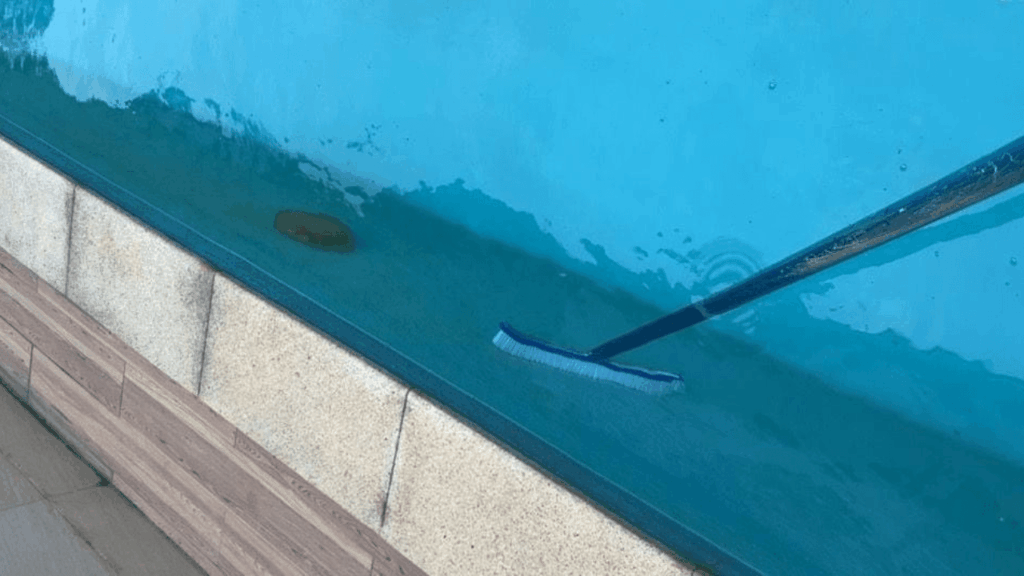
Singapore pools can operate throughout the year rather than shutting down for a long winter season.
They are also exposed to rain, warm conditions, surrounding landscaping and varying levels of use.
These factors can influence debris load and water condition.
A lightly used landed-home pool will not necessarily need the same maintenance programme as a large shared facility.
That is why service frequency should be determined by the actual pool rather than copied from a universal schedule.
Do Condominium and Commercial Pools Have Different Requirements?
Yes.
Private residential pools and licensable aquatic facilities at non-residential premises do not operate under identical responsibilities.
NEA states that licensable aquatic facilities require an Aquatic Facility licence and that licensees must maintain facility cleanliness and ensure the water meets applicable regulatory limits. The agency also publishes requirements for laboratory testing and daily on-site testing of pH and residual disinfectant.
Outsourcing maintenance does not transfer the licensee’s regulatory responsibility to the pool contractor.
For condominium, hotel, club and other applicable facilities, the maintenance agreement should therefore make clear who carries out routine testing, how results are recorded, how problems are escalated and which responsibilities remain with the licensee or facility operator.
A private landed-home owner does not automatically operate under the same licensing framework.
How Much Do Swimming Pool Specialists Cost in Singapore?
There is no single swimming pool specialist fee because cleaning, pump repair, filter work, plumbing repairs and surface restoration are different services.
The figures below are KCN’s published landed-home planning ranges, not Singapore-wide market averages. Condominium and commercial work may require separate assessment. Different service prices should also not automatically be added together because a proper diagnosis may show that only one service is necessary.
| Service | KCN Published Planning Range |
| Regular pool cleaning | S$150–S$350/month |
| Standard pump repair | S$120–S$350 |
| Filter servicing/replacement | S$200–S$600 |
| Minor plumbing repair | S$80–S$250 |
| Moderate plumbing work | S$150–S$400 |
| Green-pool restoration | S$150–S$850/session |
| Partial retiling/patch repair | S$300–S$800 |
| Partial fibreglass coating | S$400–S$900 |
| Major replacement/restoration | Custom quotation |
KCN’s current specialist guide states that landed-home cleaning is approximately S$150–S$350 per month, standard pump repairs S$120–S$350, filter work S$200–S$600, green-pool restoration S$150–S$850 per session, partial retiling S$300–S$800 and partial fibreglass coating S$400–S$900. Plumbing and larger restoration work are priced according to scope.
What Affects Swimming Pool Specialist Costs?
The type of service is the first factor.
A routine cleaning visit is very different from mechanical repair or surface restoration.
Pool size can affect cleaning and restoration work.
Equipment type and model can affect repair cost.
The amount of preparation can affect retiling or coating.
Access can also change the labour involved, particularly at larger or managed properties.
For mechanical repairs, replacement parts and the condition of surrounding equipment can influence the final scope.
For concealed plumbing or surface problems, the contractor may not know the full condition until some work has begun.
This is why a useful quotation should explain how additional work will be approved rather than leaving variations open-ended.
What Should a Swimming Pool Specialist’s Quotation Include?
The quotation should begin with the diagnosed or suspected problem.
A vague description such as “pool repair” makes comparison difficult.
For mechanical work, the scope should identify the equipment being inspected, the suspected fault, required parts, labour and testing.
For plumbing work, it should identify the area being repaired and any likely access or reinstatement requirements.
For retiling or coating, it should state the treatment area, preparation and finishing work.
KCN’s current specialist guidance recommends that quotations make labour, replacement components, materials, access requirements and exclusions clear. It also notes that the process for approving additional costs should be agreed where concealed conditions cannot be known before work begins.
Owners should also clarify what is not included.
Draining, water replacement, electrical work, excavation, deck removal, reinstatement or follow-up treatment may need separate consideration depending on the project.
Warranty wording should also distinguish workmanship support from any separate manufacturer warranty on new equipment.
What Should a Pool Maintenance Agreement Include?
A recurring maintenance agreement should clearly state what happens during each visit.
Visit frequency should be specified.
The routine cleaning scope should be clear.
Water testing and ordinary chemical adjustment should be defined.
If chemicals are described as “included,” the contract should explain whether this refers only to ordinary balancing or also covers major algae recovery and unusual corrective treatment.
Equipment observations should also be distinguished from technical repairs.
A technician may check the visible condition of pumps and filters during routine maintenance without dismantling equipment or replacing parts as part of the same monthly fee.
Reporting matters too.
A useful service record can show attendance, completed tasks, water readings, visible equipment concerns and recommended follow-up.
For shared facilities, reporting requirements may need to be more formal.
How Often Should a Pool Specialist Visit?
There is no universal servicing schedule for every swimming pool.
KCN currently advertises regular weekly or biweekly cleaning.
For many landed-home pools, weekly attention can provide a practical opportunity to clean the pool, monitor the water and notice developing equipment changes.
Some sheltered or lightly used pools may be suitable for a different arrangement after assessment.
Shared facilities can require substantially more operational attention because usage and regulatory responsibilities differ.
The better question is therefore not:
“Is weekly or biweekly always correct?”
It is:
“Does the pool remain stable and properly maintained between visits?”
How Do You Know Whether Your Current Pool Maintenance Is Working?
A well-maintained pool should remain reasonably stable between scheduled services.
Recurring patterns provide useful information.
If algae repeatedly returns before the next visit, investigate why.
If the water becomes cloudy despite routine cleaning, look at chemistry, filtration and circulation.
If the same weak-flow complaint keeps appearing, the pump, filter and plumbing may need a more focused assessment.
If tiles repeatedly loosen in the same area, the surface beneath them may deserve attention.
The goal is not simply to restore the pool after every problem.
It is to reduce how often the same problem returns.
What Evidence Should a Swimming Pool Specialist Provide?
A useful specialist should be able to provide more than marketing claims.
For maintenance work, service records and water readings can show what happened during each visit.
For repairs, photographs of the affected equipment or area can help explain what was found.
For restoration work, before-and-after photographs can demonstrate the type of work previously completed.
KCN’s current website displays what it describes as actual before-and-after results from its projects.
Project evidence becomes even more useful when it explains the diagnosis.
For example, a strong case study would show:
symptom → investigation → identified cause → service selected → post-repair result
That is more meaningful than a photograph showing only that the pool looked better afterwards.
What Credentials Should You Check?
Credentials can provide supporting information, particularly when pool work involves mechanical equipment, chemicals, wet environments and technical repairs.
KCN’s public materials describe its team using bizSAFE Level 3 and BCA L1 language, while its specialist guidance states that its installation material identifies BCA registration under the ME11 Mechanical Engineering workhead at L1.
Owners should still verify current registration where it matters to the project.
Credentials are useful indicators of company status and safety processes, but they do not replace relevant experience, proper diagnosis, suitable insurance, a detailed scope or clear workmanship terms.
What Does KCN’s Pool Care Guarantee Mean?
KCN currently advertises a 100% Satisfaction Guarantee and states that it will make service-related issues right at no extra cost.
The exact coverage should still be confirmed for the service being purchased.
Cleaning, repaired components, replacement equipment and surface restoration can involve different forms of workmanship or manufacturer coverage.
Owners should therefore confirm the applicable period, exclusions and what happens if the original problem returns.
How Do You Choose the Right Swimming Pool Specialist?
The best swimming pool specialist is not simply the company with the longest list of services.
Start with whether the provider understands the actual problem.
Ask what it believes is causing the symptom and what evidence supports that conclusion.
Then look at whether the proposed service logically addresses the diagnosis.
For recurring water problems, the company should consider chemistry, circulation and filtration.
For weak flow, it should be able to distinguish pump, filter and plumbing issues.
For equipment repair, it should explain why a component can be repaired or why replacement is more practical.
For surface work, preparation should be explained rather than treating the visible finish as the only issue.
Finally, compare the quotation, communication, service reporting, credentials and aftercare.
The strongest specialist is one that can explain why the proposed work is necessary, not merely what it costs.
Why Consider KCN Pool Services?
KCN may be suitable for owners who want one provider with access to several connected areas of pool care.
Its current service range includes regular pool cleaning, pump repair and replacement, filter servicing and replacement, green-pool restoration, plumbing and equipment repair, retiling and fibreglass coating.
This breadth can be useful when the source of a recurring problem is unclear.
Weak circulation can involve the pump, filter or plumbing.
Green water can involve chemistry, filtration or circulation.
Surface deterioration can require repair rather than more cleaning.
KCN’s current public positioning also emphasises diagnosis and addressing recurring issues rather than simply reacting to the visible symptom.
That does not mean every service should be carried out at once.
The correct service should still follow the diagnosis and be approved through a clear quotation.
Frequently Asked Questions About Swimming Pool Specialists in Singapore
What Does a Swimming Pool Specialist Do?
A swimming pool specialist maintains, diagnoses, repairs or restores the systems that keep a pool operational. Depending on the provider, this may include water care, cleaning, circulation, pumps, filters, plumbing, tiles and surface coatings.
What Is the Water–Flow–Equipment–Surface Framework?
It is a practical way to organise pool diagnosis. Water covers chemistry and clarity, Flow covers circulation and plumbing, Equipment covers pumps and filters, and Surface covers tiles, coatings and finishes. A recurring problem may involve more than one area.
What Is the Difference Between a Pool Cleaner and a Swimming Pool Specialist?
A pool cleaner mainly handles routine physical cleaning and water care. A specialist can also investigate recurring circulation, filtration, mechanical, plumbing or surface problems and recommend the appropriate repair or restoration.
Is a Swimming Pool Specialist the Same as a Pool Builder?
Not necessarily. A pool builder focuses primarily on design and construction, while a maintenance or repair specialist focuses on keeping an operating pool functioning. Some companies may provide services in both areas.
When Should I Call a Swimming Pool Specialist?
Specialist assessment is useful when green or cloudy water repeatedly returns, circulation becomes weak, a pump becomes noisy or leaks, filtration deteriorates, unexplained water loss occurs or pool surfaces become damaged.
How Much Does a Swimming Pool Specialist Cost in Singapore?
KCN’s current landed-home planning ranges include approximately S$150–S$350 per month for regular cleaning, S$120–S$350 for standard pump repair, S$200–S$600 for filter work and S$150–S$850 per green-pool restoration session. Retiling, coating, plumbing and larger repairs vary by scope. These figures are KCN-published planning references rather than universal market rates.
How Often Should a Private Pool Be Serviced?
KCN currently offers weekly or biweekly regular pool cleaning. The appropriate schedule depends on pool use, debris exposure, water stability, equipment condition and how well the pool remains maintained between visits.
Why Does My Pool Keep Turning Green?
Recurring green water can involve water chemistry, inadequate circulation, poor filtration, organic load or the maintenance schedule. If treatment repeatedly clears the pool only temporarily, the underlying reason should be investigated.
Why Are My Pool Jets Weak?
Weak return flow may involve the pump, filter, blocked baskets, valves or plumbing. The circulation system should be assessed before automatically replacing the pump.
Does a Noisy Pump Need to Be Replaced?
Not automatically. Some noises can result from repairable components. Replacement becomes more relevant when the damage is extensive or repeated repair no longer restores reliable performance.
Can a Pool Specialist Service the Filter?
Yes, depending on the provider. KCN’s current service range includes filter servicing and replacement.
Can a Swimming Pool Specialist Repair Cracked Tiles?
KCN currently provides retiling work for worn or cracked pool tiles as part of its broader repair and restoration service range.
What Is Fibreglass Pool Coating Used For?
Fibreglass coating may be used for suitable rough, deteriorated or leaking pool surfaces after appropriate preparation. Its suitability depends on the underlying surface condition.
Do Condominium Pools Have Different Requirements?
Yes. Applicable non-residential aquatic facilities are subject to NEA licensing and water-quality responsibilities that do not automatically apply in the same way to a private landed-home pool.
Does Outsourcing Pool Maintenance Transfer NEA Responsibility to the Contractor?
No. The contractor can support testing, treatment and reporting, but the applicable aquatic-facility licensee remains responsible for regulatory compliance.
What Should a Swimming Pool Specialist’s Quotation Include?
The quotation should identify the suspected problem, service scope, labour, materials or replacement parts, important exclusions, testing, access requirements, additional-work approval process and applicable workmanship or manufacturer warranty terms.
What Should a Pool Maintenance Agreement Include?
It should define visit frequency, routine cleaning tasks, water testing, chemical inclusions, equipment observations, reporting and how repairs outside the normal maintenance scope are approved.
What Evidence Should I Ask a Pool Specialist to Show?
Useful evidence can include service records, photographs of diagnosed faults, before-and-after project images and examples of work on similar property types. KCN currently publishes what it describes as actual before-and-after project results on its website.
Does KCN Provide a Service Guarantee?
KCN currently publishes a 100% Satisfaction Guarantee and states that it will make service-related issues right at no additional cost. The exact coverage for the individual service should still be confirmed in writing.
Conclusion
Swimming pool specialist are valuable because pool problems rarely exist in isolation.
A practical way to investigate a recurring problem is:
Water → Flow → Equipment → Surface.
Green or cloudy water can involve chemistry, filtration or circulation.
Weak return flow can involve the pump, filter, valves or plumbing.
Equipment faults may be repairable without automatic replacement.
Cracked tiles and deteriorated pool finishes may require restoration rather than additional cleaning.
The practical process is therefore:
identify the symptom → determine which part of the pool system is involved → diagnose the underlying cause → select the appropriate service → confirm the quotation → monitor the result.
KCN Pool Services currently provides regular pool cleaning together with pump and filter services, green-pool restoration, plumbing and equipment repair, retiling and fibreglass coating for Singapore properties.
For owners and property managers, the value of a swimming pool specialist is not simply having access to more services.
It is having someone who can determine which service the pool actually needs.
Singapore’s year-round pool use makes consistent care important, but specialist pool care should not mean performing unnecessary work.
The goal is to keep the water, circulation, equipment and physical pool surface working together so that developing problems can be identified before they become repeated or expensive failures.
